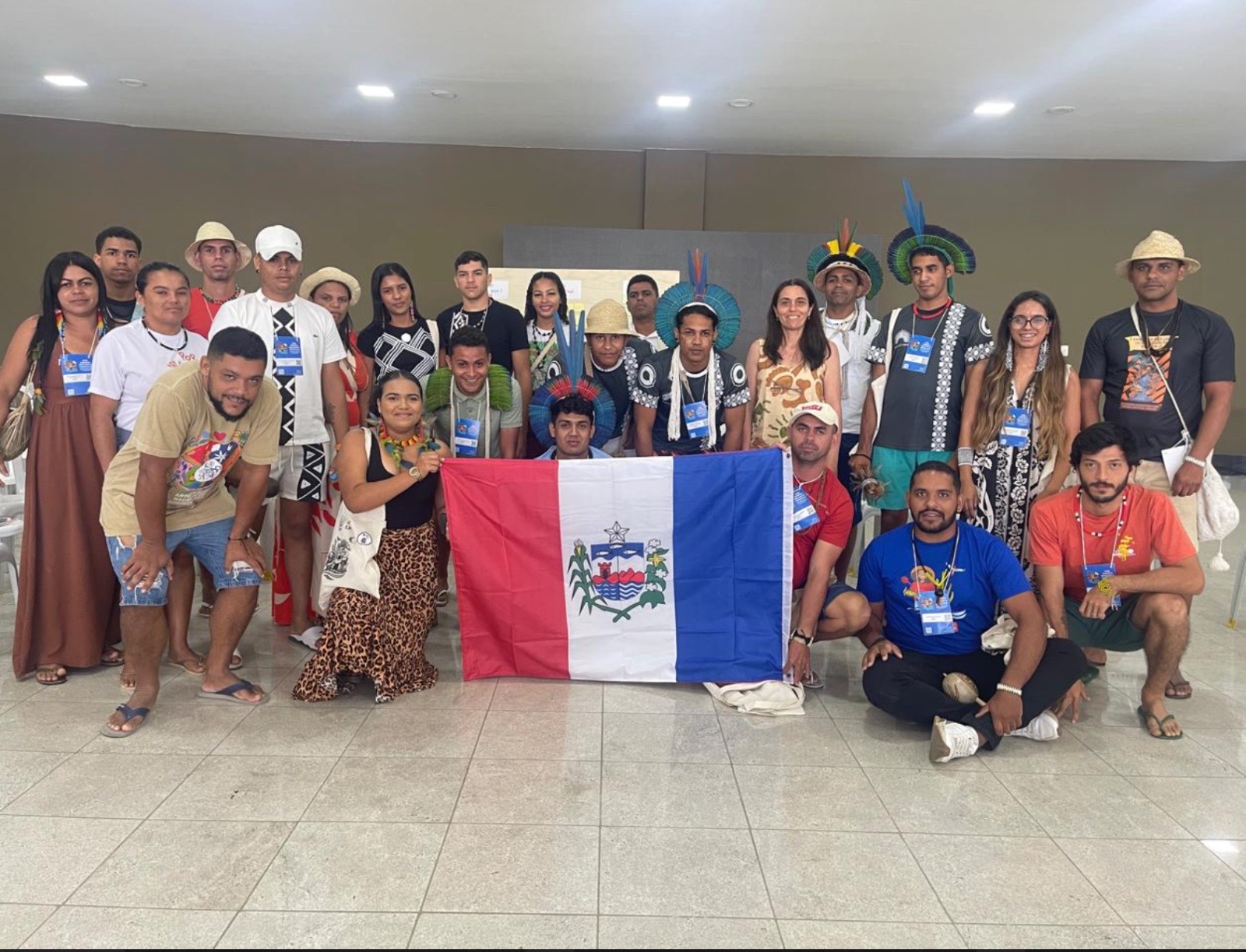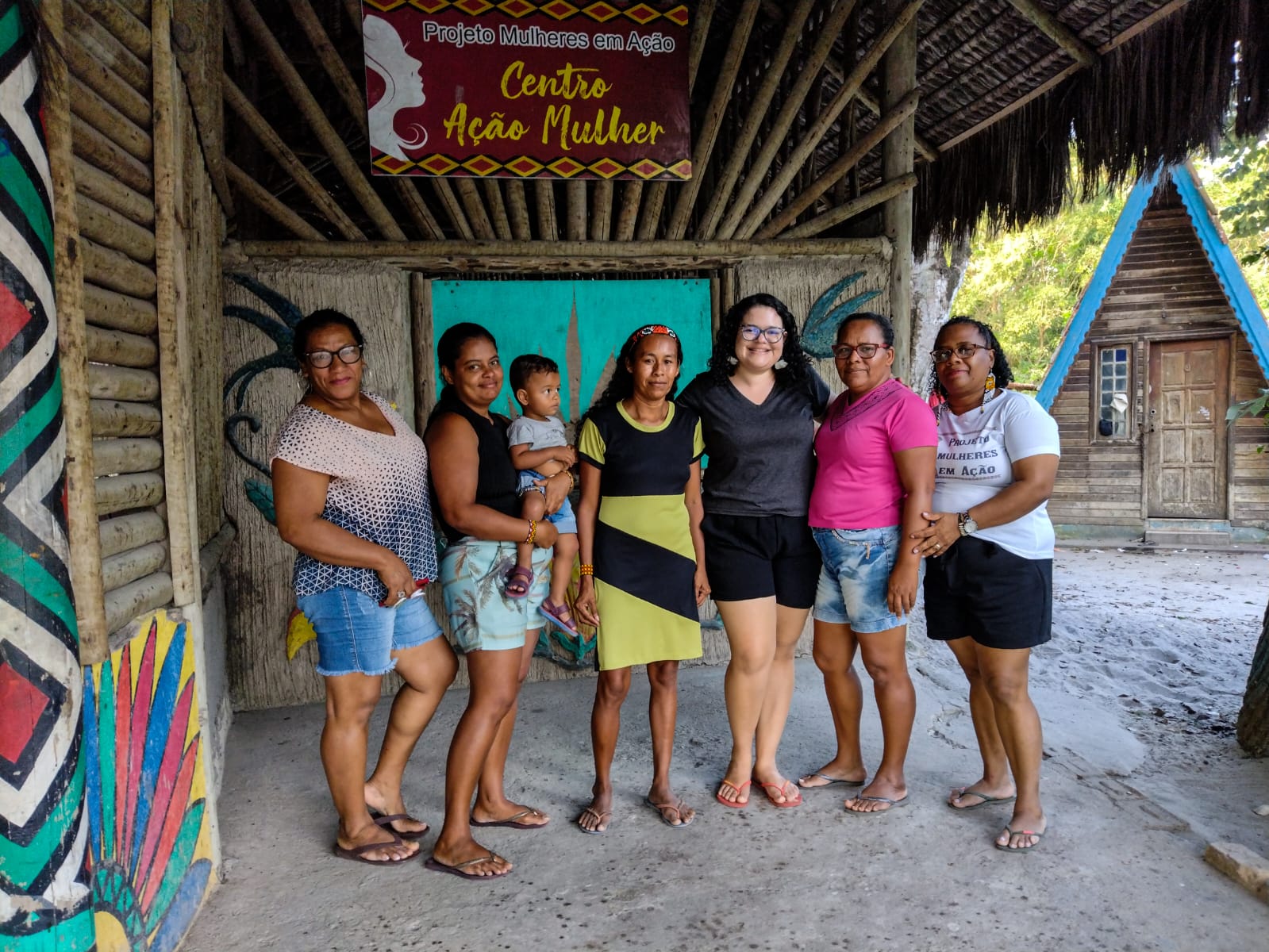
By directly funding women from diverse indigenous communities, the Indigenous Women’s Fund of Brazil (IWFB) empowers local leaders to address their most pressing challenges while preserving cultural knowledge and protecting territories.
Program Structure and Leadership
IWFB is coordinated by the Paiakan Institute. Tsitsina Xavante and Tânia Paiakan lead the nomination, selection, and interview process. Ruth Andrade created the program with support from the Regenerosity Seed Flow Fund ecosystem. Livia Prestes of the Maniva Agroecology Network in Amazonas state provided operational and communication support.
The fund operates in cycles, having already completed two successful rounds:
The first cycle focused on the north and center-west regions. It launched with 13 women from the Huni Kuín, Wapichana, Kambeba, Galib Kalinai, Galib Marwono, Arapiun, Tuparí, Kaiapó, Xerente, Karajá, Tupinambá, Guató, and Kadiwéu peoples.
The second cycle expanded to the northeast, south, and southeast. It welcomed 17 women from the Krikati, Jenipapo-Kanindé, Potiguara, Tabajara, Xukurú, Kariri-Xocó, Pataxó, Guarani, Ava-Guarani, and Kaiagang peoples.


“We want to bring more women into the struggle and defense of rights. We’re going to recover the skills of the potters. To support women at home, at work and in art.”
Ivanilda Potiguara
Key Focus Areas
Each leader develops an Action Plan addressing one or more of four key areas:
1. Local Community Strengthening
Projects aim to improve the lives of women who hold traditional ecological and cultural knowledge in indigenous communities. These typically involve traditional health practices, herbal medicine, songs, chants, art, handicrafts, and the revival of ancestral culture. The Kadiwéu women from the first cycle revived their traditional body paint graphics. They created colorful T-shirts and eco-bags. These products not only generated income but also preserved their visual cultural heritage.
2. Education and Access
These initiatives increase indigenous women’s access to education, employment, and political voice. The Tupinambá women focused on translating important texts. Their goal was to strengthen their indigenous mother tongue. They established a stronger presence at local universities. This effort created pathways for future generations.
3. Territory Protection
These projects support indigenous women in protecting land, confronting sexism, and gaining recognition for their leadership. Kaiapó women increased their political participation with the acknowledgment of Chief Raoni, who called them into events usually reserved for men. This gave them visibility and participation in important discussions about land rights and environmental protection. Chief Raoni is a prominent Indigenous leader in Brazil, internationally recognized for his advocacy to protect the Amazon rainforest and Indigenous peoples throughout Brazil.
4. Combating Violence Against Indigenous Women
These initiatives support victims and promote women’s rights within indigenous communities. The Krikati women organized the “corrida de tóra,” a ritual race where participants run while carrying a heavy log (tóra), traditionally marking the end of mourning. In this ceremony, runners demonstrate strength and endurance as they carry the heavy log throughout the race. The Krikati women adapted this ritual to honor and bring closure for victims of violence against women.


Program Implementation
Each selected leader receives 15,000 reais (approximately USD $3,000) for a three-month project:
- The process begins with a large virtual Conversation Circle. Participants share personal stories. They also share cultural practices and their visions for change;
- This is followed by two comprehensive communication workshops. These workshops focus on personal, local, and virtual communication skills. They empower women to effectively share their cultures and worldviews;
- Throughout the process, participants receive daily support and guidance, with the freedom to adapt their projects as needs evolve;
- A Closing Ceremony marks the end of the cycle with stories, reflections and their visions for the future.
The conversation circle methodology is central to the fund’s approach, reflecting a practice common across all Brazilian indigenous peoples. This is visible in the architecture of the malocas (traditional meeting houses) where community matters are discussed in circular gatherings. This cultural element is intentionally preserved in the fund’s virtual interactions.
Reciprocal Exchange
A unique strength of IWFB is how it facilitates connections between different indigenous groups. Many participants have not had the opportunity to interact with women from other indigenous nations. These exchanges lead to shared learning, solidarity, and a stronger collective voice for indigenous women across Brazil.
“Cumaru from the bush, carrapicho root, eucalyptus, fedegoso, big mint, herbs in the bush. We’ll keep meeting every month to continue producing our medicines in the women’s backyards.”
Karine Santos

Join the Circle
Join this transformative work in various ways. Receive these stories regularly by subscribing to the newsletter below or by following Instituto Paiakan on Instagram.
You can also share this story with a friend or make a donation.
By supporting the Indigenous Women’s Fund of Brazil, resources flow to indigenous women leading vital projects in their communities. These projects preserve cultural knowledge, protect territories, and amplify indigenous voices.