
Their encounter took place during the Brazilian Congress of Agroecology, one of the main national gatherings of the agroecology movement. Held every two years, the Congress brings together small farmers, researchers, students, social movements, and grassroots organizations from different regions of the country. It is a space where agroecology is discussed and shared as science, practice, and movement, closely linked to territories, food systems, and collective struggles.
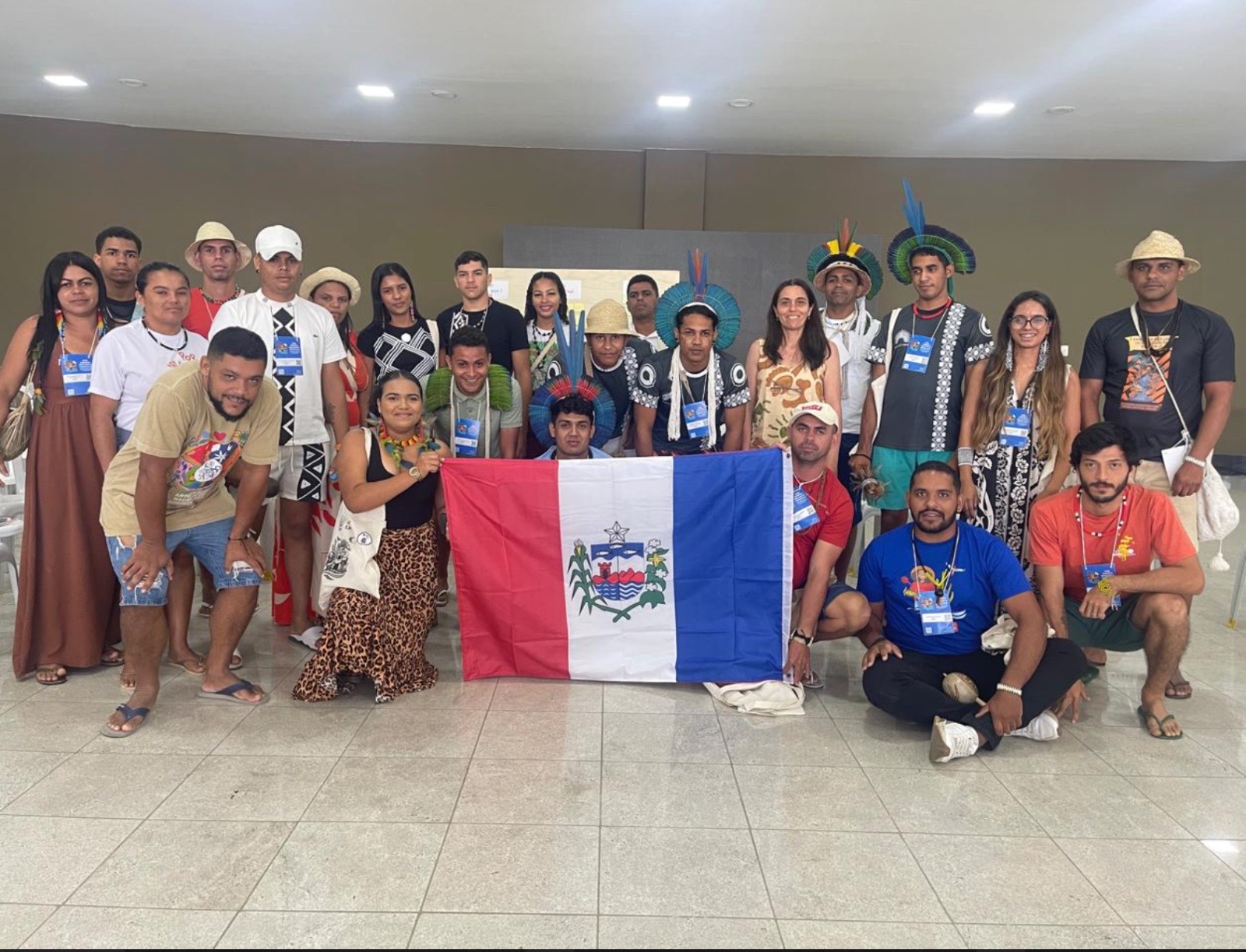
Blossom cohort members (photo above) convened from Associação de Jovens Produtores Tingui Botó, Associação Centro de Cultura Sabuká Kariri Xocó, Coletivo Jupago Kreká, and Associação Indígena Marajó with Regenerosity facilitator Ana Carolina, holding the Alagoas state flag.

For the Indigenous Blossom cohort, being part of this space marked an important moment in their shared path. The group is composed of four organizations from the Northeast of Brazil, all based in the semi-arid Caatinga biome: the Associação de Jovens Produtores Tingui Botó, the Associação Centro de Cultura Sabuká Kariri Xocó, the Coletivo Jupago Kreká, and the Associação Indígena Marajó. Coming from different peoples and territories, they arrived with distinct experiences, but also with common concerns related to land, water, food production, youth, and the continuity of their ways of life.

The Congress offered a context where this first collective meeting could unfold alongside many other grassroots initiatives. As they took part in activities, listened to experiences from other regions, and shared their own practices, the group recognized connections between what they do in their territories and the broader agroecology movement in Brazil. For some participants — especially young people — this was the first time attending a national congress of this kind.
It was very important for us to attend a conference for the first time. We saw several presentations that opened up a range of possibilities for us. We learned how to collect rainwater so that it stays in the soil longer. It was one of the most productive conversations, learning how to feed the water table.
Kaline Felipe, Associação Indígena Marajó
For some, the experience helped give visibility to practices that were already part of their daily lives. Regeneration of land, food production, collective work, and community organization appeared reflected in the language and debates of agroecology — as something long practiced in their territories.
Meeting in person also strengthened relationships within the cohort itself. After a year of exchanges that began with interviews and online gatherings, sharing time together allowed for listening, informal conversations, mapping potential synergies and collaboration, and mutual recognition among the groups.
“Meeting the other members of the Blossom group was a very enriching and inspiring experience. It was very meaningful to exchange experiences and learn about the different backgrounds and approaches that each person brought to the table. This diversity strengthened our sense of belonging and collaboration.”
Cris, Jupago Kreká

This first in-person gathering became a reference point in the cohort’s journey. From there, each group returned to its territory carrying new connections, shared reflections, and questions to continue working with their communities.

As the days passed, exchanges with other movements, students, farmers, and organizations from different parts of Brazil expanded the group’s network and references. Conversations about water harvesting and landscaping in the semi-arid region, food sovereignty, seed saving, and youth engagement resonated with experiences shared by many others at the Congress.

“It was great to meet the other groups participating in the project who are fighting the same battle as our people, seeking to strengthen family farming in our communities.”
Manuel Henrique, Associação Indígena Marajó
Sharing Experiences from the Territories
The Indigenous Blossom cohort at the Congress also brought their own experiences, research, and forms of expression into the space of the Congress, contributing to the collective construction of knowledge that characterizes the agroecology movement in Brazil.

Members of the groups presented papers connected to their territorial realities, and reports of popular and community-based experiences developed there. These presentations were grounded in everyday practices and processes, highlighting agroecology as something built through lived experience, collective work, and continuous learning.

Beyond formal presentations, other forms of expression were also present. Music, songs, and dancing opened space for sharing stories, values, and memories that are part of Indigenous life. These moments reminded participants that agroecology is not only discussed through papers and panels, but also carried through voices, bodies, and relationships.
The participation of the Indigenous Blossom cohort in the Brazilian Congress of Agroecology was made possible through collective effort and support. The decision to attend emerged from the Indigenous organizations themselves. Regenerosity supported this movement by providing resources for travel. Registration, accommodation, and food were granted by the Congress organization.

As the Blossom Program continues through the 2025–27 cycle, the experiences from this encounter remain as reference points. They inform future steps, reinforce collective bonds, and support the continued work of Indigenous associations and collectives committed to regeneration, territorial care, and community life in the semi-arid Northeast of Brazil.

